English
 Tiếng Việt
What does Pharmacy study, how is it taught, and what jobs can you get after graduation? A practical perspective for prospective students before choosing a major.



What does Pharmacy study, how is it taught, and what jobs can graduates get? These are very real questions from prospective students and parents every admissions season. In the context of increasing healthcare needs, Pharmacy is always considered a stable field of study with high social value, but it also demands seriousness, discipline, and great responsibility.
The reality is: Pharmacy is not an easy field to study, but it is a prestigious, sustainable, and worthwhile profession for those who truly understand the job and are willing to pursue it to the end.
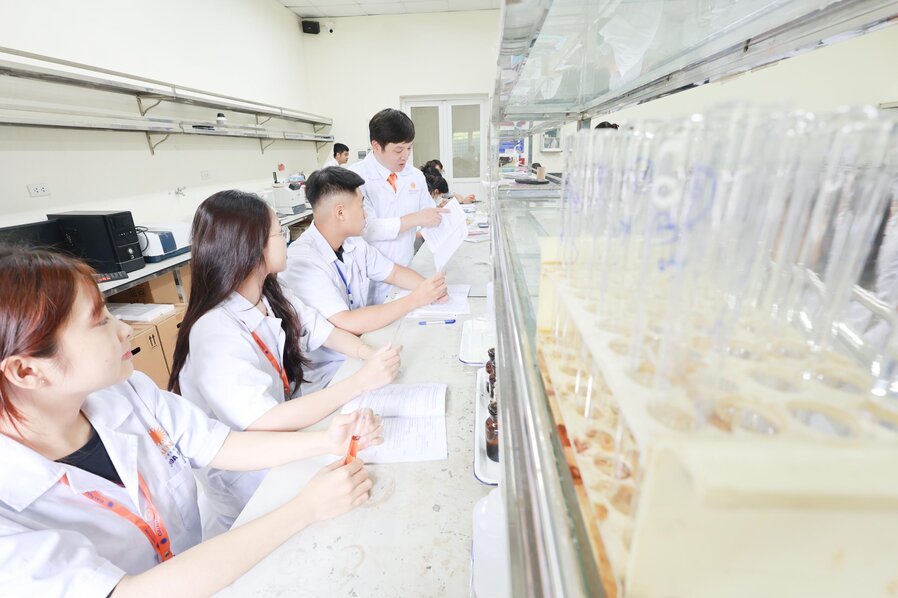
This article will help you understand the nature of Pharmacy, the learning path, and career directions after graduation, while also providing a realistic perspective on the training environment for Pharmacy at Dai Nam University – one of the reputable institutions for training pharmacists, trusted by thousands of students and trainees nationwide as the place to fulfill their dreams.
What is Pharmacy?
Pharmacy is a field of study that trains highly specialized human resources in the field of medicines and health-related products, including: research, production, testing, distribution, and advising on the safe, rational, and effective use of medicines for the community.
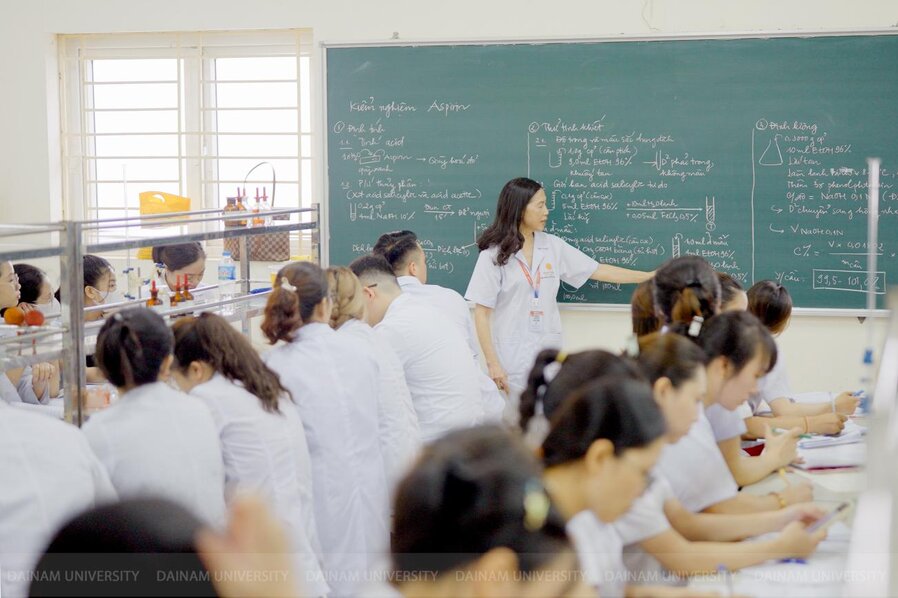
Pharmacy students not only learn how to "sell medicine" as many people think, but are also equipped with fundamental and in-depth scientific knowledge about:
- Pharmacology
- Medicinal herbs – Traditional medicine
- Pharmaceutical chemistry
- Pharmaceutical manufacturing technology
- Drug testing
- Pharmaceutical management and business
- Professional ethics and law in the field of Pharmacy
In other words, pharmacists play a crucial role in ensuring the quality of medications and patient safety.
How is Pharmacy studied?
1. Solid foundation of knowledge
In their early years, pharmacy students study foundational subjects such as:
- General chemistry, organic chemistry, analytical chemistry
- Biology, microbiology, pathophysiology
- Human Anatomy and Physiology
This is a necessary foundation for students to access specialized subjects in later stages.
2. In-depth learning, combined with practical application.
From year 2-3 onwards, the training program focuses heavily on specialized modules:
- Pharmacology – Clinical Pharmacy
- Pharmaceutical formulation and manufacturing technology
- Testing of drugs, cosmetics, and dietary supplements.
- Medicinal plants and medicines derived from medicinal plants
- Drug supply management, pharmaceutical legislation
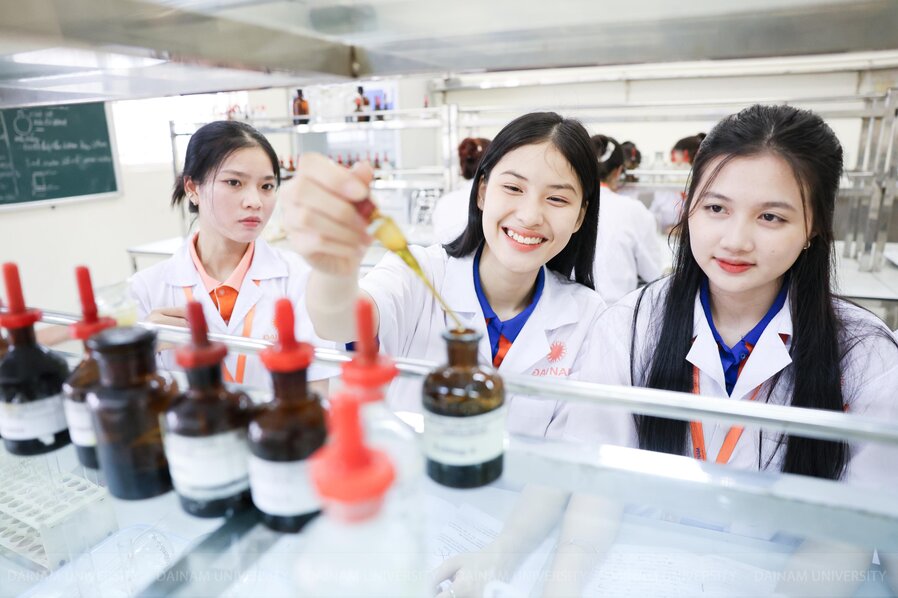
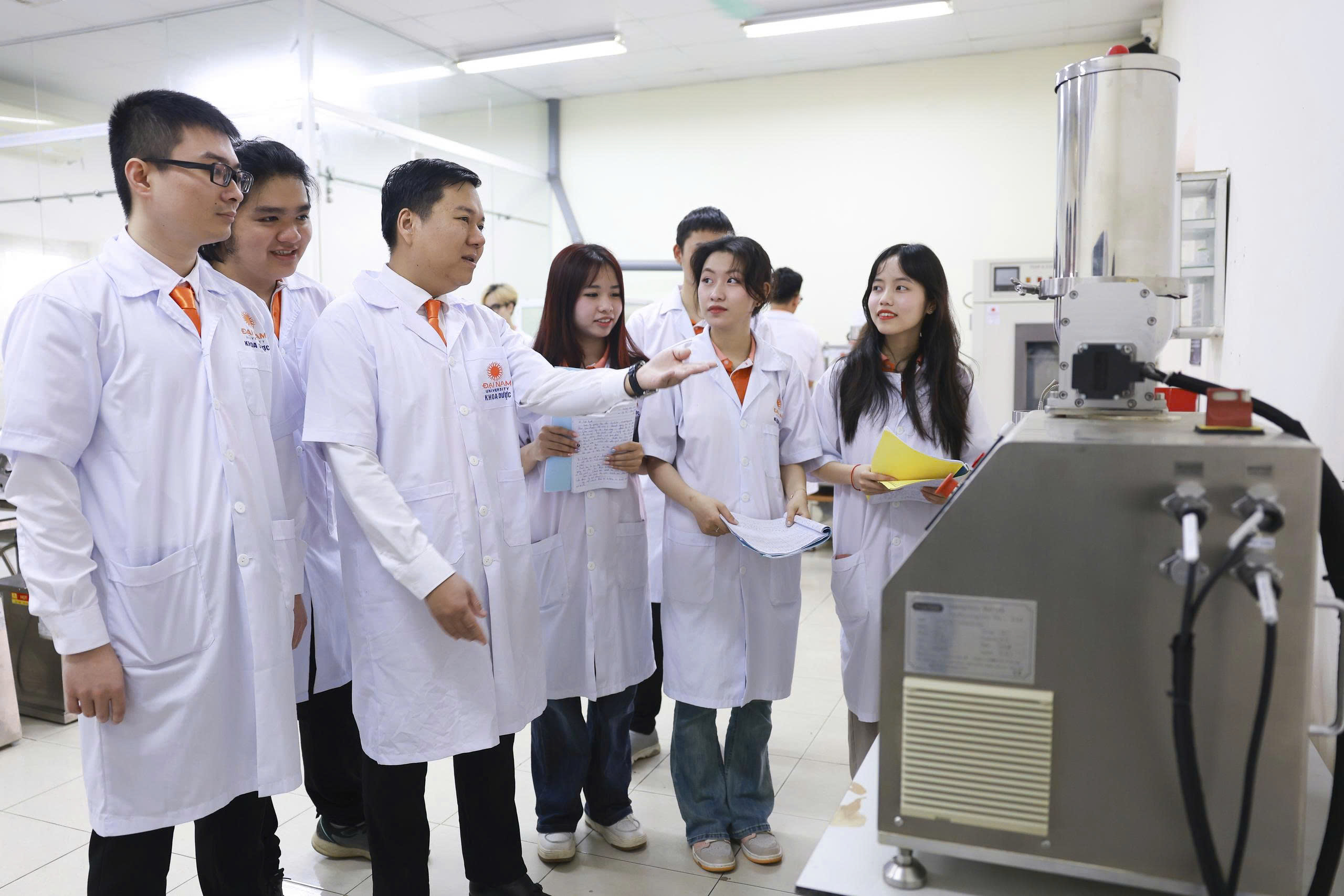
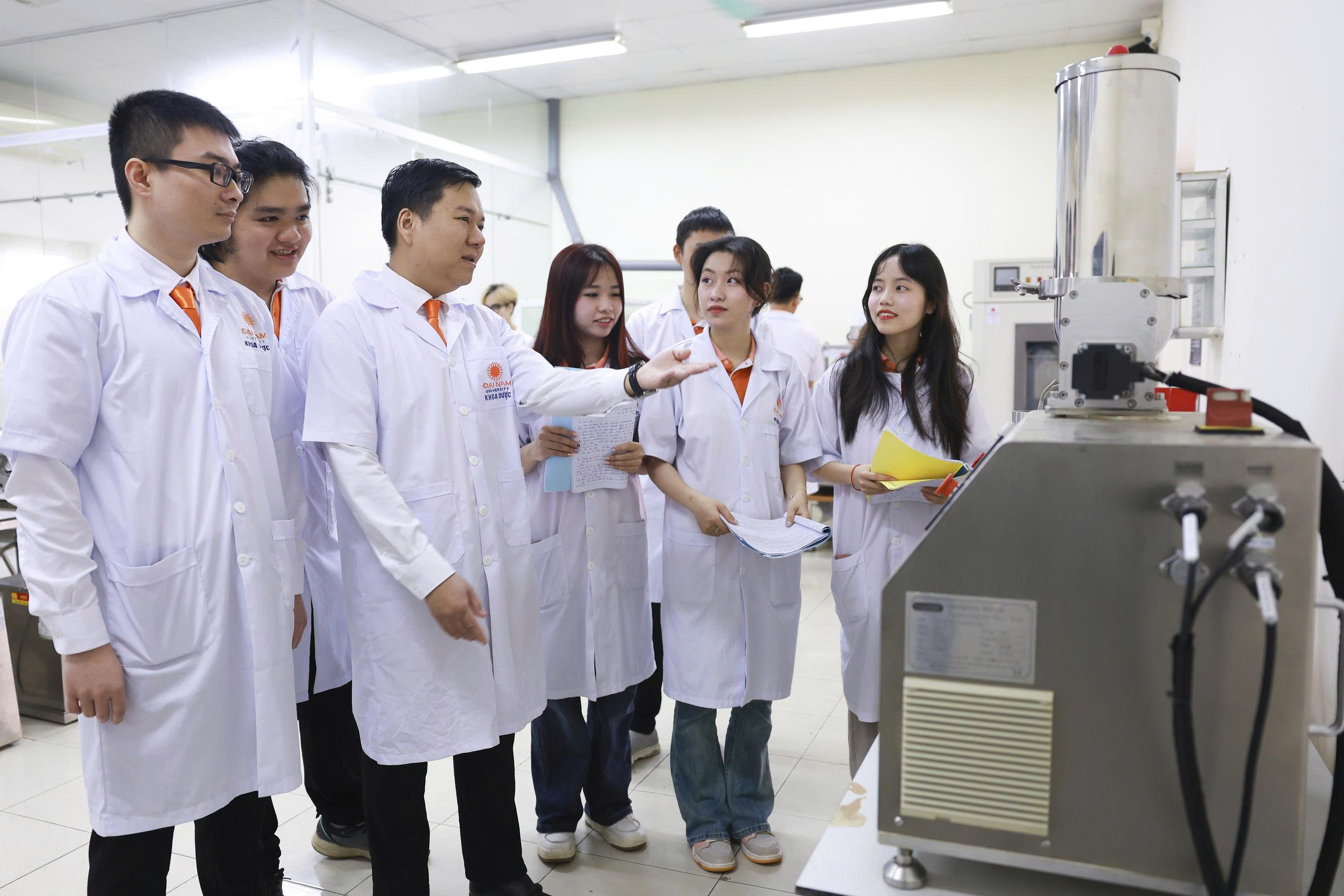
At the Faculty of Pharmacy, Dai Nam University, students learn in a system of modern laboratories and workshops, increasing the time spent on practical work and experiments, helping them to "learn as they go and apply what they learn."

3. Start internships early and gain practical experience in the profession.
One distinguishing feature of Pharmacy training at Dai Nam University is its practical-oriented approach. Students will:
- Internships at pharmacies, hospitals, and pharmaceutical companies.
- Attend training sessions with experts and practicing pharmacists.
- Develop communication skills, medication counseling skills, and problem-solving skills for the profession.
This helps students avoid feeling overwhelmed when they enter the workplace after graduation.
What jobs can a university-graduated pharmacist get?
This is the question that candidates are most interested in when researching what Pharmacy studies, how to study it, and what jobs can they get after graduation.
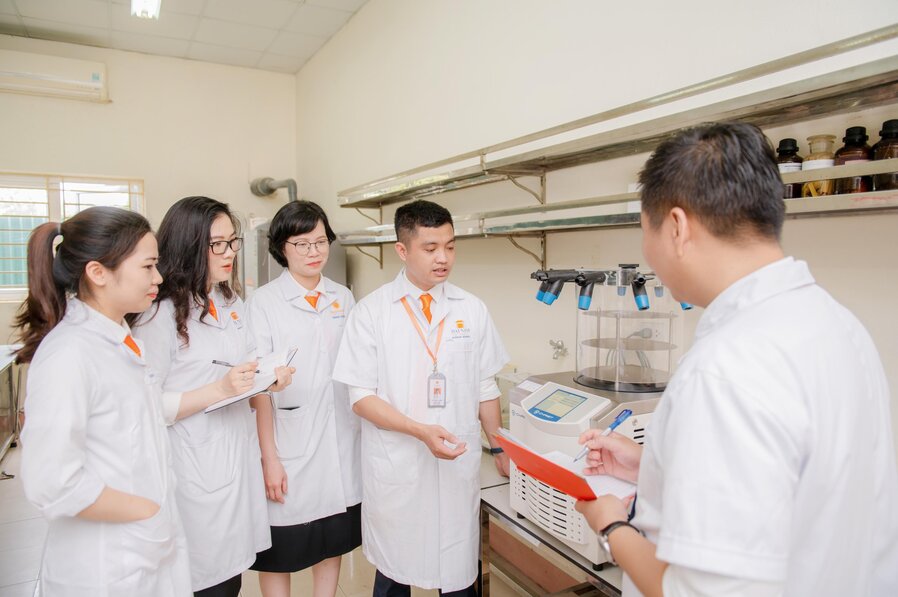
After graduation, university-trained pharmacists can work in a variety of positions:
1. Pharmacists at pharmacies and drugstores.
- Providing advice on safe and rational drug use.
- Manage and operate the pharmacy in accordance with legal regulations.
- Stable income, with the potential to become a pharmacy owner.
2. Working at hospitals and medical facilities
- Clinical pharmacist
- Drug inventory management
- Participate in consultations and provide advice on medication use to doctors and patients.
3. Working at a pharmaceutical company
- Drug research and development
- Quality testing
- Pharmaceutical sales representative, pharmaceutical business
- Product management, pharmaceutical marketing
4. Research, teaching, and further education.
- Master's and Doctoral studies in Pharmacy
- Working at research institutes, universities, and medical colleges.
With a solid foundation of training, pharmacy students have many career options and long-term development opportunities.
Why should you study Pharmacy at Dai Nam University?
Dai Nam University (Address: No. 1 Xom Street, Phu Luong, Hanoi) is a renowned health science training institution nationwide. The university has been involved in training high-quality human resources for the healthcare sector since 2013, with three flagship programs: Medicine, Pharmacy, and Nursing, attracting thousands of students.
Specifically for the Pharmacy ngành, by 2025, the school will have nearly 3,000 students enrolled and will provide the industry with 1,500 university-level pharmacists.
1. Distinctive features of the training program at the Faculty of Pharmacy, Dai Nam University.
But Training duration: 4.5 years. Students graduate 0.5 years early, saving costs and entering the job market sooner.
- Training program: Meets national accreditation standards.
- Application training:
- Over 40% of the time is dedicated to hands-on practice, honing practical skills and preparing you for immediate employment.
- The theory is concise and easy to apply to work.
- Active teaching methods that develop knowledge, skills, and self-reliance.
- Flexible assessment , reduced exam pressure, focus on practical skills.
2. Experienced teaching staff
The faculty members of the Faculty of Pharmacy are experienced and dedicated professors, associate professors, doctors, masters, and specialists; they have held important roles in departments at universities such as the University of Pharmacy, the Military Medical Academy, Hanoi Medical University, and the University of Medicine and Pharmacy - VNU Hanoi...
3. Modern facilities
Students study in a system of standard laboratories and practice rooms, effectively serving the courses on pharmaceutical preparation, testing, and medicinal plants.
- The Pharmacy Practice Center is separate, comprising 4 pharmaceutical chemistry practice and laboratory rooms and 10 technical practice rooms with an area of 1,000 m2, meeting the standards set by the Ministry of Health for university-level pharmacist training facilities.
But Two medicinal herb gardens were established according to the list of essential medicines issued by the Minister of Health.
But The practice pharmacy is equipped according to the GPP (Good Pharmacy Practice) model.

4. Business experience – Learning by doing
Students gain practical experience, hands-on training, and internships at: the Central Institute for Drug Testing; the Central Institute of Medicinal Materials; FPT Long Chau Pharmaceutical Joint Stock Company; Traphaco Joint Stock Company; Lotus Pharmaceutical Technology Company Limited; Phuc Hung Pharmaceutical Company; Ha Tay Pharmaceutical Joint Stock Company; Xanh-Pon General Hospital; Central Dermatology Hospital; Ha Dong General Hospital; Bach Mai Hospital; Viet Duc Hospital; Central Children's Hospital…
5. A humane learning environment, centered around the learner.
Dai Nam University is oriented towards training based on the philosophy of "Dedicated to the learner," creating a friendly learning environment and supporting students' comprehensive development in professional knowledge, skills, and ethics.
6. English language training costs four times more than other fields.
...
>>> REGISTER FOR ADMISSION: HERE
BTT







Register for admission consultation 2026
scholarships and tuition support worth up to 55 billion VND

scholarships and tuition support worth up to 55 billion VND